


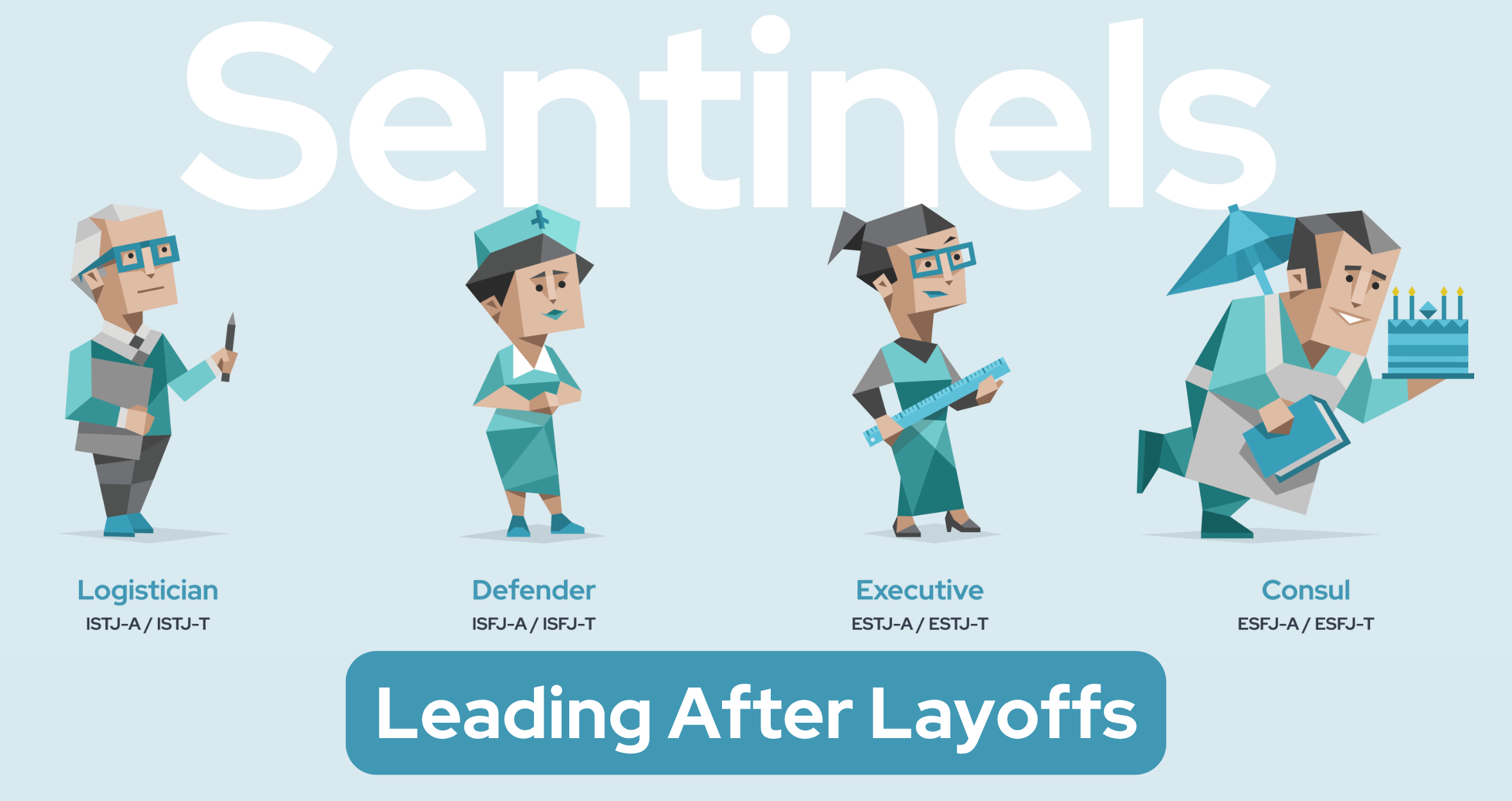
Sentinels – ISTJs (Logisticians), ISFJs (Defenders), ESTJs (Executives), and ESFJs (Consuls) – are the four personality types who share the Observant and Judging personality traits.
You may already recognize the Sentinels on your team. After a layoff, they may not really look like they’re affected outwardly – they’ll still show up on time, meet deadlines, and make sure the important stuff gets done.
But looking steady doesn’t necessarily mean they feel steady.
They’re likely holding a lot of practical questions in their minds, and they won’t always say them out loud:
What exactly is expected of me now?
Which routines, processes, and commitments are still in place?
If I keep doing everything I’m supposed to do, how secure is my job?
Today, we’re looking at what a layoff can do to people who rely on stability and clear expectations – and how to give Sentinels firmer ground when so much around them has changed.
For tips on how to recognize and work effectively with all Sentinel personalities, check out our past Identifying Personalities at Work series.
What a Layoff Looks Like to a Sentinel
Sentinels tend to value order, security, and stability. They like knowing what’s expected, trust systems that have worked before, and often take pride in being dependable. In our “Dark Side of Personality” survey, 80% of Sentinels said they avoid risky or unpredictable situations.
A layoff can shake all of that at once.
For many Sentinels, there’s also a strong belief that effort matters. Show up, do good work, keep your commitments, and you should be able to count on some degree of stability in return. In our “Success” survey, 65% of Sentinels said success is usually determined by hard work – more than belief in yourself, talent, or anything else luck.
Then they watch hardworking colleagues lose their jobs anyway.
That can raise a difficult question: if doing everything right didn’t protect the people who left, what does that mean for the people who stayed? A Sentinel may never put it that bluntly, but the concern can sit underneath more practical questions about roles, expectations, and what happens next.
The day-to-day disruption can be hard too. After a layoff, responsibilities shift, approval chains change, and familiar processes may no longer fit. Sentinels generally prefer clear plans and defined expectations, so having to constantly guess who owns what or which rules still apply can add another layer of stress.
And because they’re often reliable, there’s another risk: more work starts landing on them simply because everyone trusts them to get it done. Let’s turn to that next, and see what managers can do to prevent it.
The rest of this article is open to paid subscribers. We’ll look at how dependable employees can end up carrying too much after a layoff, how to restore some stability without pretending everything is back to normal, and how to set expectations Sentinels can rely on.
If you’d like to upgrade, you can still take advantage of our Big Birthday Bonanza to save on a premium subscription.
