


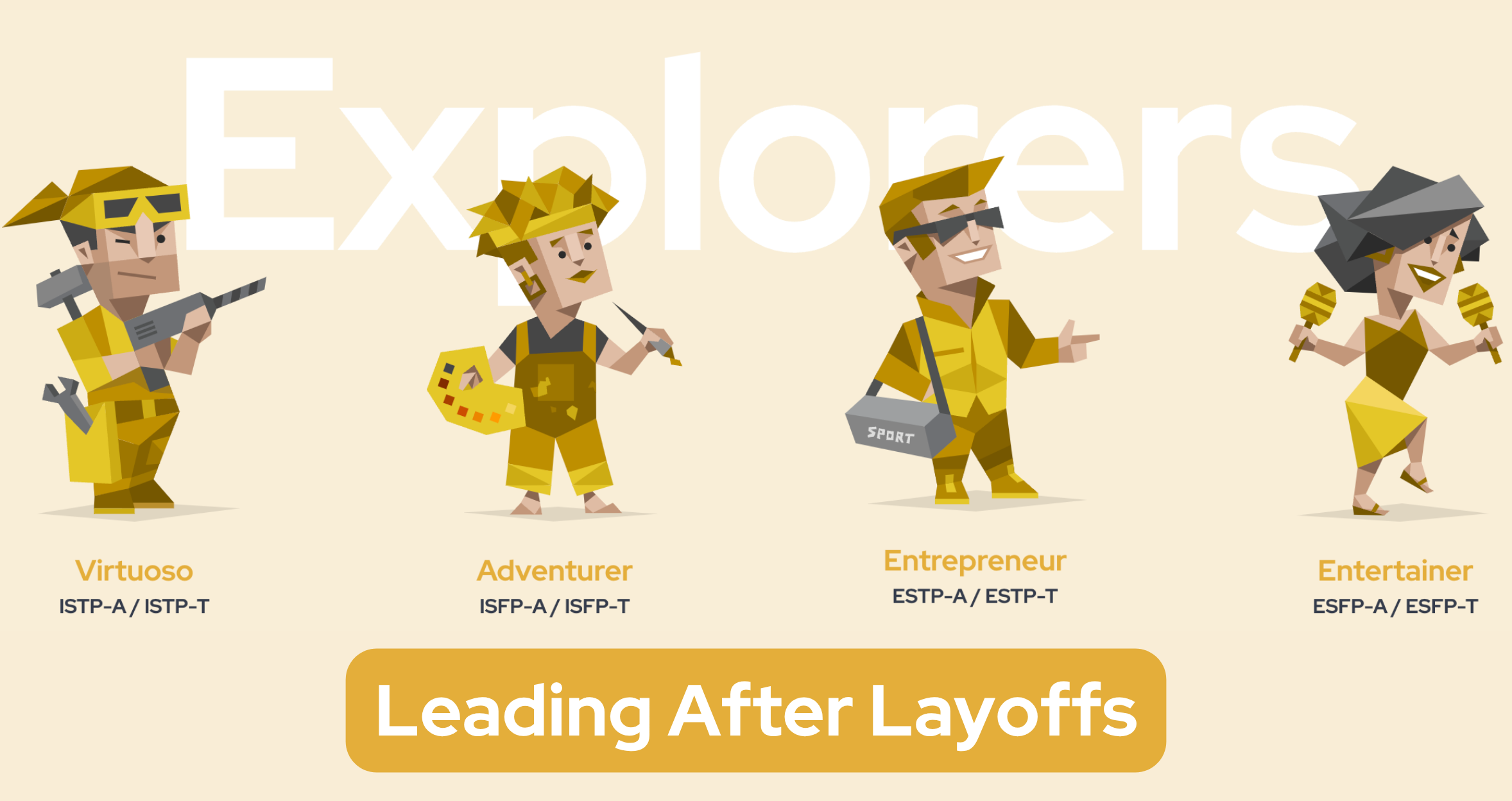
Explorers – ISTPs (Virtuosos), ISFPs (Adventurers), ESTPs (Entrepreneurs), and ESFPs (Entertainers) – are the four personality types who share the Observant and Prospecting personality traits.
After a layoff, Explorers may look like they’ve adjusted quickly. They’re finding workarounds, filling gaps, and getting on with what needs to happen next.
But adapting quickly doesn’t necessarily mean the change hasn’t affected them.
Their questions are often grounded in the here and now:
When do we stop talking about what happened and start doing something?
Is this place going to be stuck like this for long?
What can I actually get moving on today?
Today, we’re looking at why the weeks and months after a layoff can be harder for Explorers than the initial disruption – and what managers can do to keep them engaged.
For tips on how to recognize and work effectively with all Explorer personalities, check out our past Identifying Personalities at Work series.
What a Layoff Looks Like to an Explorer
Explorers tend to handle sudden change with a fair amount of flexibility. They’re often comfortable adjusting on the fly, even when they don’t have much time to prepare. In our “Fear” survey, less than half (43%) of Explorers said it’s difficult for them to try new things, so a disrupted routine may be easier for them to adapt to than it is for some other personality types, such as Sentinels.
Such flexibility can be a strength in the first few weeks after a layoff. Explorers may be quick to adjust to new responsibilities, find practical workarounds, and deal with problems as they come up.
The bigger challenge can come later.
After the initial scramble, work can slow down in a different way: hiring freezes, delayed decisions, unclear priorities, and weeks of hearing “we’re still figuring it out.” In our “Focus and Attention Span” survey, 85% of Explorers said it’s hard for them to focus on one thing for a long time. For personalities who often prefer action and variety, a long stretch of waiting can become frustrating.
The same flexibility that helps Explorers adjust to a changed workplace can also make another change feel possible. If their job starts to feel increasingly limited, repetitive, or stalled, they may begin wondering what else is out there.
Now, that doesn’t mean an Explorer who gets restless is halfway out the door. But it does mean managers shouldn’t assume that someone who handled the layoff well in week one will still feel fine in month three.
The rest of this article is open to paid subscribers. Below, we’ll look at how to check in with an Explorer without making the conversation feel forced, what changes in their behavior are worth paying attention to, and how to give them enough action and autonomy to stay engaged.
If you’d like to upgrade, you can still take advantage of our Big Birthday Bonanza to save on a premium subscription.
