


Our Leading Well After Layoffs Challenge looked at what happens across a whole team after a layoff – what to say, how to give people space to process, how to rebuild trust, and how to figure out what work still makes sense.
Now, throughout the rest of this month, we’re looking more closely at how different personality Roles respond, because people don’t all react to a layoff in the same way.
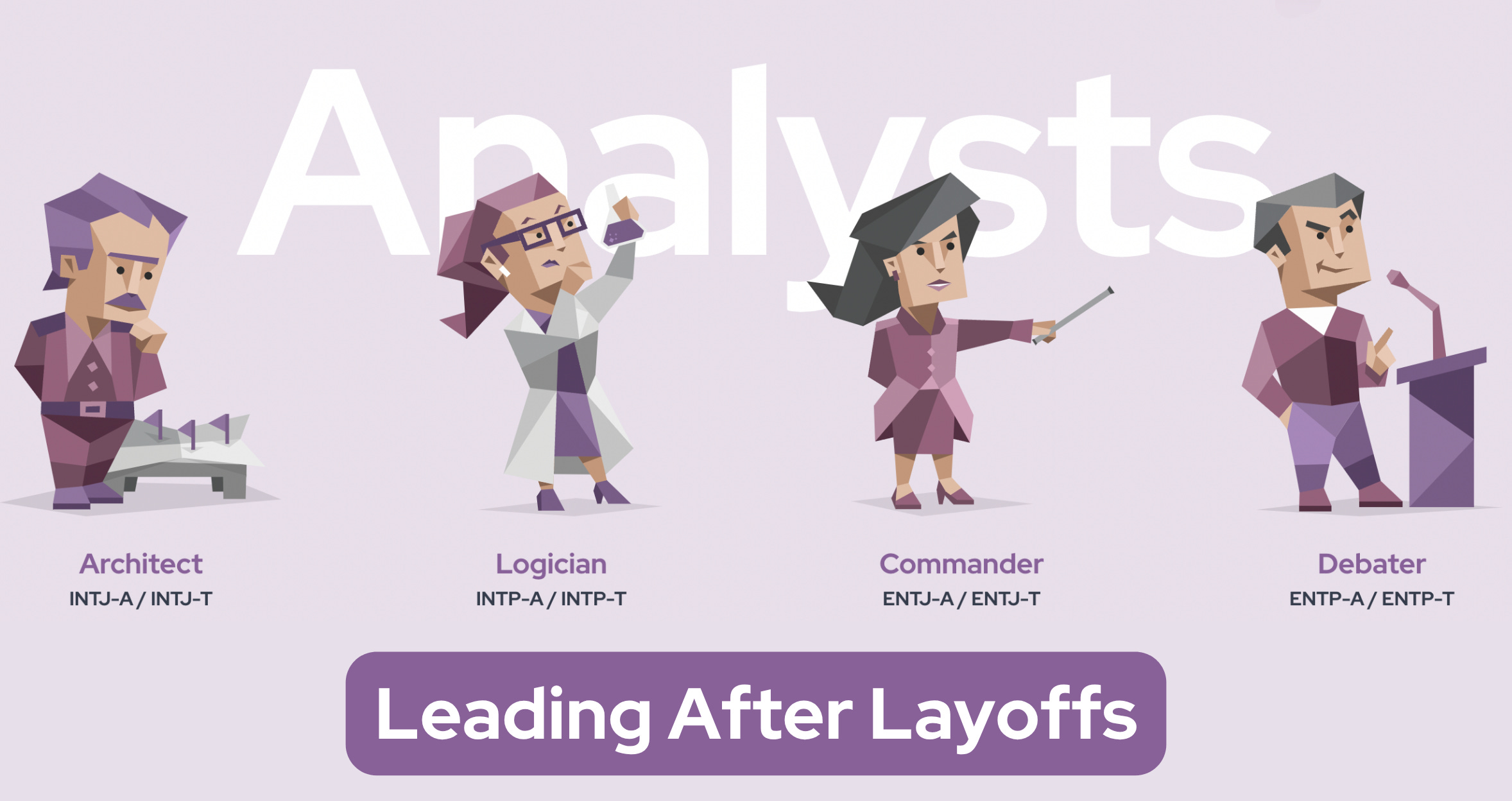
We’re starting with Analysts – INTJs (Architects), INTPs (Logicians), ENTJs (Commanders), and ENTPs (Debaters) – the four personality types who share the Intuitive and Thinking personality traits.
You may already recognize them on your team. Since the layoff, they may be the ones asking the tougher questions in meetings:
Why was this decision made?
What does it mean for the strategy?
What’s the plan from here?
Analysts feel the loss of a layoff like anyone else. But asking questions is often part of how they make sense of what happened. Today, we’re looking at what may be underneath those questions – and how to answer them in a way that helps Analysts recover.
For tips on how to recognize and work effectively with all Analyst personalities, check out our past Identifying Personalities at Work series.
What a Layoff Looks Like to an Analyst
Of the four personality Roles, Analysts may be among the quickest to accept a layoff – if the reasoning behind it makes sense to them. In our “Head vs. Heart” survey, 93% of Analysts said they listen to their heads rather than their hearts when making important decisions. If the market shifted, if the numbers stopped working, if something genuinely had to change, an Analyst can accept a difficult outcome surprisingly quickly.
But they need to understand why it happened.
“It was a business decision” probably won’t be enough. To an Analyst, that isn’t much of an explanation. They question everything and don’t take much on faith, so if the reasoning isn’t clear, they’ll start working it out for themselves. Do the stated reasons match who was laid off? Does this month’s message line up with what leadership said last month? Does the strategy make sense?
And many Analysts were likely already questioning leadership before the layoff even happened. In our research, 45% of Analysts said they’d be better than their boss at their boss’s job – far more than any other Role. So when something this consequential happens, they’re likely to look even more closely at the decisions being made and the people making them.
So remember all of this when the hard questions start coming in a team meeting. Often, an Analyst is trying to work out whether the explanation holds up – and whether they can still trust your judgment. They’ll come to a conclusion either way, so it’s better if you’re willing to be part of that conversation.
The rest of this article is open to paid subscribers. Below, we’ll look at what it can mean when an Analyst stops pushing back, how to rebuild their confidence, and how to give them meaningful work to own after a layoff.
If you’d like to upgrade, you can still take advantage of our Big Birthday Bonanza to save on a premium subscription.
