

Gen X at Work
Day 3 of the 5-Day Leading Multigenerational Teams Challenge

Welcome to Day 3 of the Challenge
Gen X doesn’t tend to dominate generational conversations. Have you noticed that?
While Boomers built the institutions and Millennials and Gen Z have been busy disrupting them, Gen X has largely been getting on with it.
Born between 1965 and 1980, they’re now in their mid-forties to early sixties – occupying significant stretches of middle and senior management, holding enormous amounts of institutional knowledge, and rarely making a fuss about any of it.
Before we dive into today’s post, here’s a reminder of where we are in the 5-Day Leading Multigenerational Teams Challenge:
Day 3: Gen X at Work (You Are Here)
Day 4: Baby Boomers at Work
Day 5: Navigating Multigenerational Conflict
The Conditions That Shaped Generation X
To understand how Gen X tends to show up at work, it helps to look at three formative forces.
1. Self-reliance as a rational strategy
Many Gen X members came of age during the recessions of the early 1980s and ‘90s, when corporate downsizing was widespread and the implicit “lifetime employment” contract their parents had counted on was visibly unraveling. Layoffs were household events, and the pragmatic response was to become adaptable enough not to need the guarantee: build portable skills, maintain a realistic view of what institutions could offer, and don’t stake your stability on employer loyalty alone.
2. The analog-to-digital transition
Gen X adopted digital tools as working adults, not as children. Many entered the workforce when email was new and the internet was emerging, and they developed technological competence through adoption rather than immersion. This means many can operate fluently in both worlds – they understand how organizations worked before the digital revolution and how they function within it. That dual literacy is often underappreciated. Their relationship to communication technology tends to be functional: reach for whatever tool gets the job done, without strong attachment to any particular platform.
3. Latchkey independence and cultural skepticism
Rising dual-income households and divorce rates meant many Gen X children spent significant time unsupervised – figuring things out without adult guidance. Culturally, they came of age in an era that questioned authority without offering easy alternatives: Watergate’s aftermath, the AIDS crisis, a broader mood of skeptical detachment reflected in everything from punk to grunge to the rise of irony as a dominant register. “Showing up and doing the work” became a primary form of professional identity because it was what they could count on.
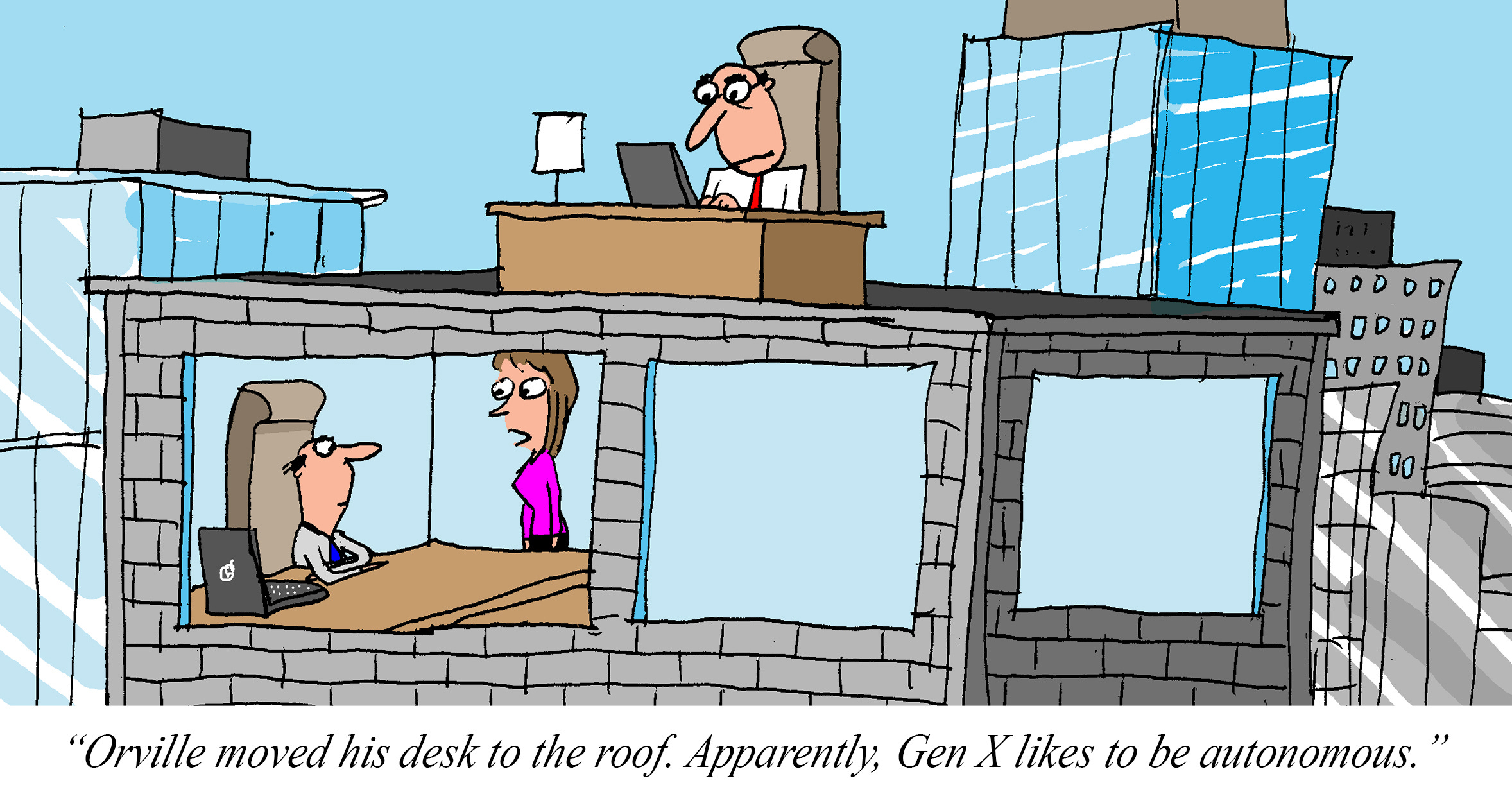
What this adds up to: None of these forces apply to every Gen X employee. But together, they help explain some common tendencies – a strong preference for autonomy, a pragmatic focus on results over process, a healthy skepticism toward institutional messaging, and a self-directed approach to career development that doesn’t require much external reinforcement to sustain.
Next, let’s look at how these formative forces tend to play out in the three roles people occupy at work – as subordinates, colleagues, and managers.
